Wailua River Kauaʻi: Sacred Journey from River of Kings to Secret Falls
Experience Hawaiʻi's only navigable river, where ancient temples meet adventure in the heart of Kauaʻi
Written by a Local Expert
Kalani MillerAloha mai kākou. I remember my tūtū (grandmother) telling me that some places hold memories in the stones and the water. For me, that place has always been the Wailua River. It's more than just a ribbon of water cutting through Kauaʻi's lush East Side. It's a place you feel deep in your bones. It has mana.
As someone who has paddled these waters since I was a kid, watching the light filter through the hau trees and feeling the cool mist from the falls, I want to share with you why this river is the true heart of Kauaʻi.
In our culture, mana is the spiritual life force. It's an invisible energy and power that flows through all things—people, objects, and especially places like this. It's what makes a place sacred, what gives it weight and presence. The heiau, or temples, that line this valley are reservoirs of this power. They're places where generations of my ancestors connected with the divine.
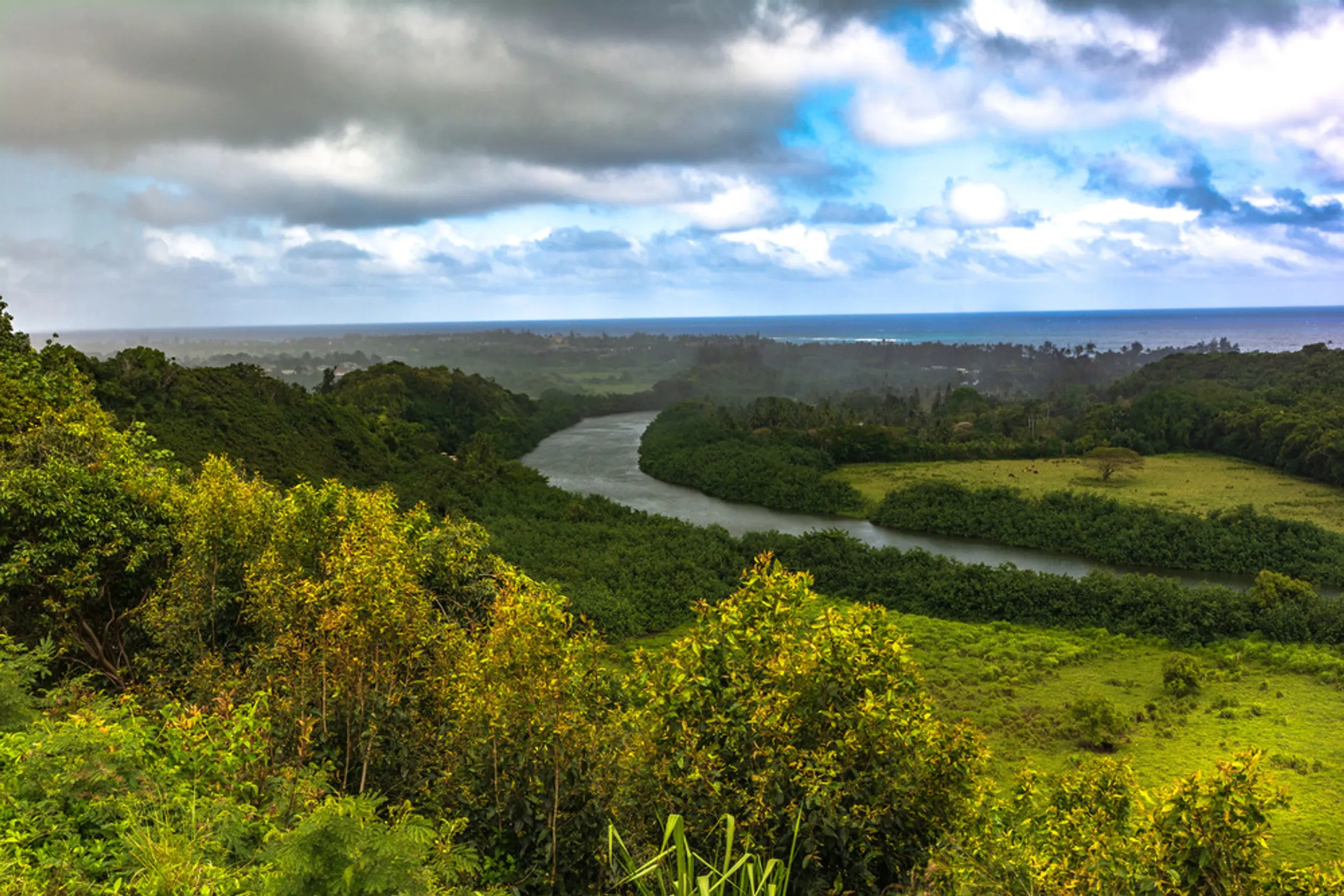
This is Hawaiʻi's only navigable river. It's a 20-mile journey that begins high on the slopes of Mt. Waiʻaleʻale, one of the wettest spots on our planet. It ends its journey in the Pacific Ocean. But its true significance lies in its history. This valley, known as Wailuanuiahoʻano or "the Great Sacred Wailua," was the island's capital. It was the seat of power for the aliʻi nui (paramount chiefs), and the sacred birthplace of kings.
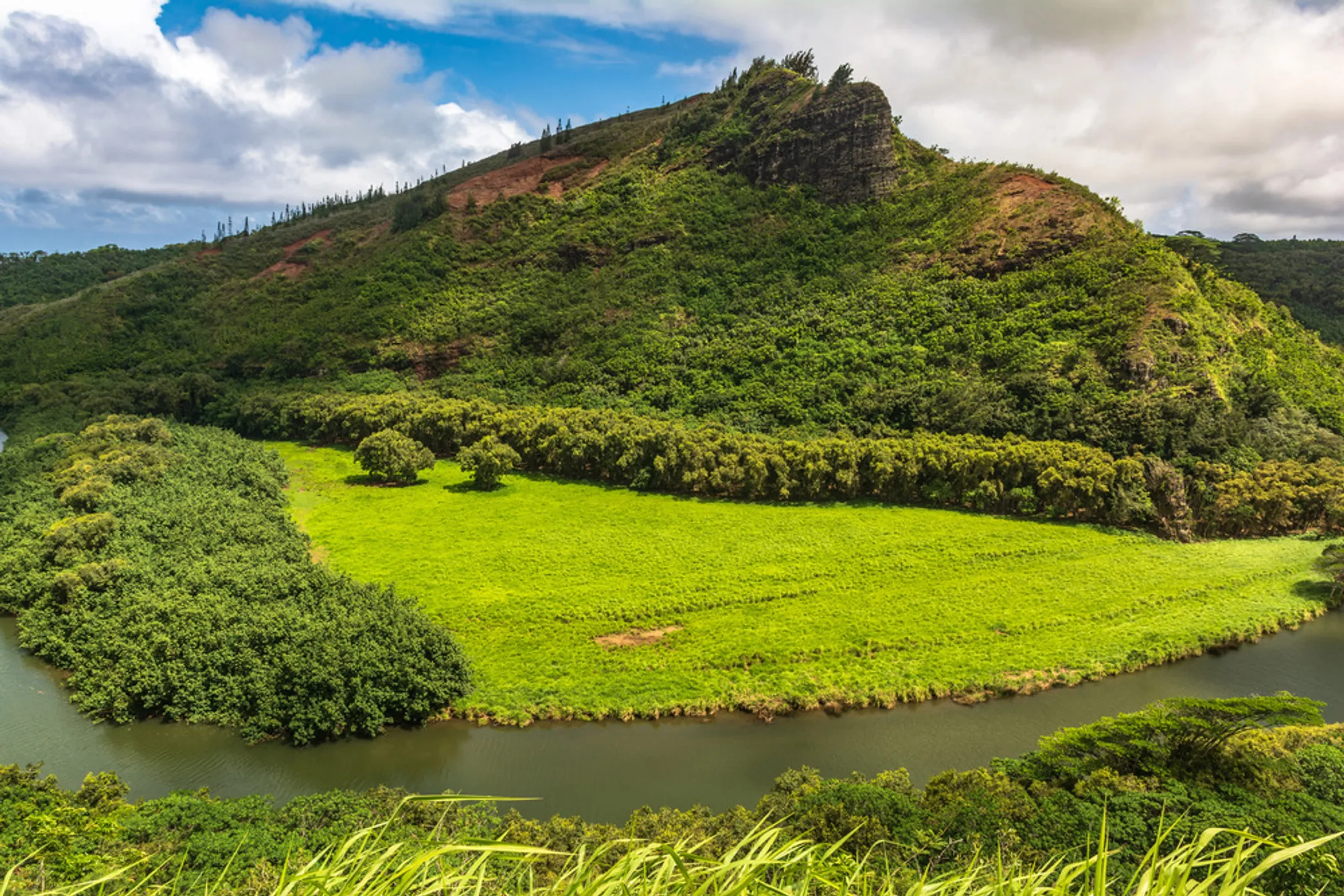
Today, the river invites us all to explore its beauty. But to truly understand it, you must know its stories. In this guide, we'll journey together from mauka (the mountains) to makai (the sea). We will uncover the legends of the kings and gods who walked this land. We'll paddle to a waterfall hidden deep in the valley. And we'll learn how we can all visit this sacred place with the respect and aloha it deserves.
This is more than a list of things to do. It's an invitation to connect with the living spirit of Wailua.
The Sacred Wailua: A Deep Dive into History and Legend
Before there were kayaks and tour boats, the Wailua River was the epicenter of life on Kauaʻi. Its importance is rooted in the traditional land division system known as the ahupuaʻa. This is a wedge-shaped slice of land running from the highest mountain peaks down to the sea.
The Wailua ahupuaʻa was one of the largest and most resource-rich on the island. It provided everything the community needed to thrive: fertile land for farming taro, abundant freshwater, safe canoe landings, and access to the bounty of the ocean. This abundance made it the ideal location for the island's political, social, and religious center.
This entire area is anchored by the Wailua Complex of Heiaus. It's a collection of sacred sites so significant it has been designated a National Historic Landmark. It contains more ancient temples than any other ahupuaʻa on Kauaʻi. Each served a unique and vital purpose in the life of the aliʻi and the Hawaiian people.
To understand Wailua, you have to understand the temples they built. Let's walk through these sacred grounds together, from the sea to the bluffs. Let's listen to the stories the stones still tell.
Hikinaakala Heiau: Welcoming the Sun
At the very mouth of the Wailua River, where the fresh water greets the salt of the Pacific, lies Hikinaakala Heiau. The name translates to "The Rising of the Sun." Located in what is now Lydgate Park, this was a place of daily reverence. Every morning, as the first rays of light touched the eastern shore of Kauaʻi, priests would gather here. They welcomed the sun with sacred chants and prayers.
Imagine its original form: a massive rectangular enclosure, covering nearly an acre. Stone walls stood 6 feet high and an astonishing 11 feet thick. The sheer scale of its construction speaks to the immense power and authority of the chiefs who commanded it. Today, only the foundation of large upright boulders remains. But the mana of this place is still palpable at dawn.
Just north of the heiau is the Hauola Puʻuhonua, a place of refuge. In ancient Hawaiʻi, society was governed by a strict system of laws known as kapu. Breaking a kapu, whether intentionally or by accident, often carried a death sentence. But if a person could reach a puʻuhonua, they were safe. It was a sanctuary, a place of mercy and forgiveness. It also served as a place of refuge for non-combatants during times of war.
This combination of a temple for worship and a sanctuary for refuge at the river's mouth illustrates something important. It shows a society that valued both spiritual devotion and human compassion.
Nearby, partially submerged in the water, are ancient petroglyphs carved into basalt boulders. They depict human figures and fish—a direct, tangible link to the people who lived and worshipped here centuries ago.
Holoholoku Heiau & The Royal Birthstones: A Legacy of Kings
A short distance upriver lies what is believed to be Kauaʻi's oldest temple, Holoholoku Heiau. This was a formidable place, a luakini heiau used for sacrifices, often of prisoners of war. Legend holds that the very first kaeke, a large temple drum covered in sharkskin, was brought here from Tahiti. Its beat echoed through the valley.
Yet, in a fascinating juxtaposition of life and death, right next to this site of sacrifice is the place where Kauaʻi's royalty began their lives. Here you will find the Pohaku Hoʻohanau, the Royal Birthstone. Expectant mothers of the highest aliʻi lineage would travel from all over Kauaʻi, and even other islands, to give birth here. Being born on this stone ensured a child's chiefly status and divine connection.
The oral traditions surrounding this spot are powerful. It is said that when a child destined for greatness was born, the sky would erupt with thunder, lightning, and a torrential downpour. When the storm cleared, a brilliant rainbow would arc across the valley. One end would touch the exact spot of the royal birth.
Nearby is the Pohaku Piko, a sacred stone where the newborn's umbilical cord (piko) was ceremonially placed. This ensured a long and healthy life. This site powerfully demonstrates the deep connection between Hawaiian royalty, their lineage, and their sacred bond to the land itself.
Poliahu Heiau & The Bellstone: A Temple Built by Myths
Perched on a high bluff with commanding views of the river valley and the ocean beyond, Poliahu Heiau is a testament to the might of Kauaʻi's chiefs. This was another luakini heiau, a state-sponsored sacrificial temple dedicated to Kū, the god of war. Its construction and the rituals performed here were reserved for the aliʻi nui. This highlighted his spiritual and political control over the land and his people.
Adding to its mystique, legend attributes the construction of Poliahu Heiau to the Menehune. These are a mythical race of small, industrious craftsmen known for completing massive construction projects overnight. While these stories add a layer of folklore, historians believe that attributing a structure to the Menehune was a way of signifying its great antiquity. It suggested it was built long before the arrival of the Tahitian chiefs who later ruled the islands.
Near the heiau is another fascinating artifact: the Wailua Bellstone. This large, reddish basalt boulder produces a deep, resonant tone when struck with smaller stones. Its sound could travel for miles. It served as a powerful announcement of a royal birth, the arrival of an important procession, or other significant events.
Malae Heiau: The Great Temple and a Story of Change
Near the river mouth stands Malae Heiau, the largest temple on Kauaʻi and one of the largest surviving temple platforms in all of Hawaiʻi. Like Poliahu, its construction is also credited to the Menehune. Archaeological evidence suggests it was built before 1200 AD.
Malae Heiau also tells a pivotal story of cultural change in Hawaiʻi. After the traditional Hawaiian religion was officially abolished in 1819 and Christian missionaries arrived, the old ways began to fade. In the 1830s, Deborah Kapule, the influential former wife of King Kaumualiʻi (the last independent king of Kauaʻi) and an early convert to Christianity, ordered the interior walls of the great heiau to be torn down. She then used the sacred enclosure as a cattle pen.
This single act is a powerful and poignant symbol of the dramatic cultural and religious transition that swept across the islands in the 19th century.
Together, these sites are not just ruins. They are a chronicle of a sophisticated society. They tell a story of birth and lineage, of daily worship and connection to nature, of political power and warfare, of law and mercy, and ultimately, of profound cultural transformation.
Explore Every Aspect of Wailua River
From paddling sacred waters to discovering hidden waterfalls, your complete guide to experiencing the heart of Kauaʻi awaits.
ℹ️ Quick Info
- Location: East Kauaʻi
- Park Hours: 7 AM - 7:45 PM
- Entrance Fee: Free
- From Airport: 12-15 minutes
- River Length: 20 miles
- Status: Historic Landmark
🗿 Sacred Sites
- Hikinaakala Heiau
- Royal Birthstones
- Poliahu Heiau
- Wailua Bellstone
- Malae Heiau