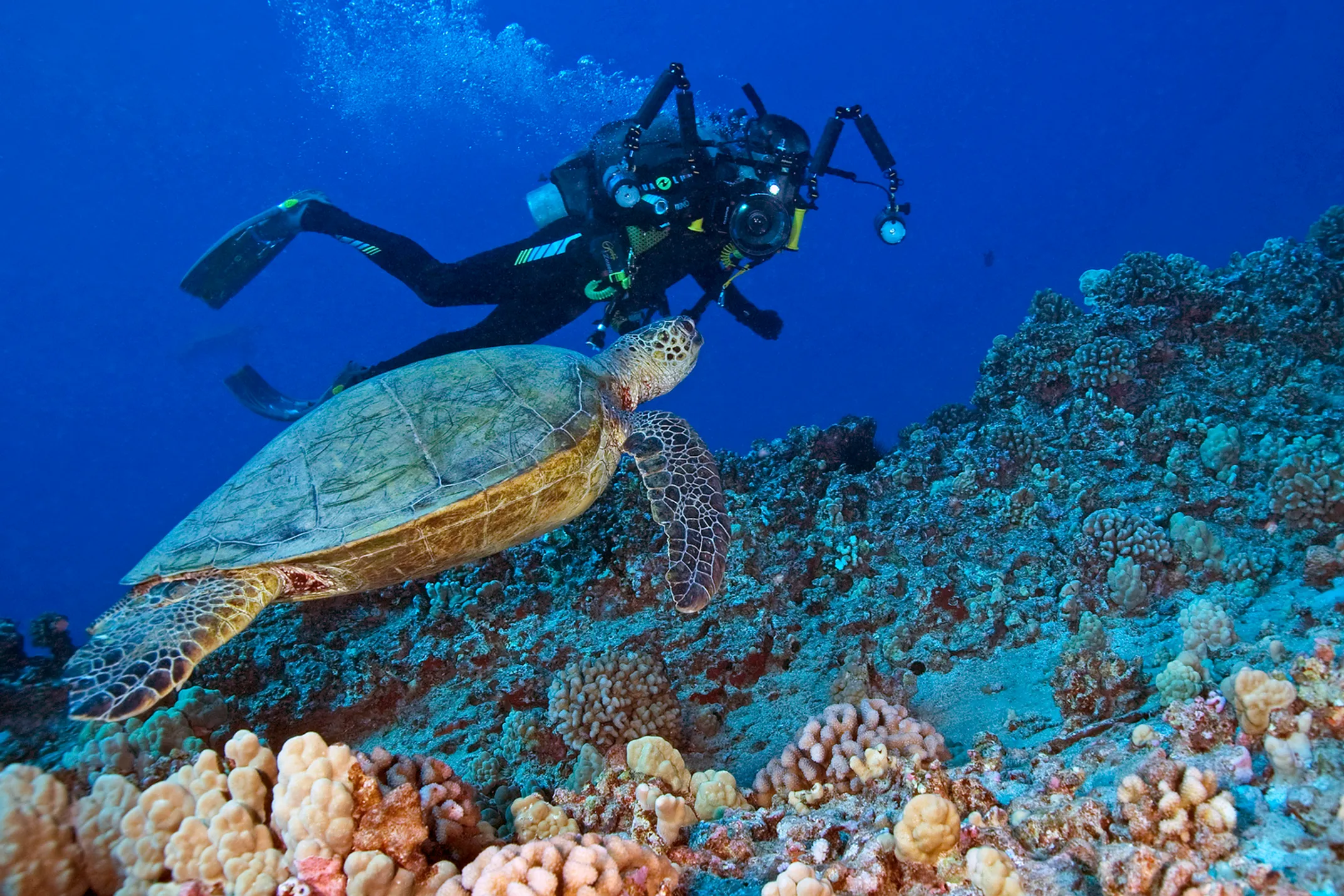
Big Island Scuba Diving
From manta ray encounters to ancient lava tubes - dive deep into Hawaii's most spectacular underwater adventures
Written by a Local Water Activities Expert
Kalani MillerThe Main Event: My Manta Ray Night Snorkel & Dive Experience
There are few things in life that feel truly otherworldly. Floating in the dark ocean as giant, graceful manta rays glide inches below you is one of them. It's a humbling, silent ballet you'll never forget. But doing it right - for your safety and the mantas' health - is everything.
The setup is brilliantly simple. After sunset, tour boats head to designated sites along the Kona coast. In the water, snorkelers hold onto a large, floating board with powerful downward-facing lights. These lights attract swarms of microscopic plankton - the primary food for manta rays.
The Experience & The Science
Soon, the mantas arrive. These gentle giants have wingspans that can exceed 16 feet. They perform mesmerizing barrel rolls and graceful loops as they filter-feed on the dense plankton cloud. They often come within inches of snorkelers on the surface.
These are reef manta rays (Mobula alfredi), and they're completely harmless. They're filter feeders with no teeth, no stingers, and no barbs. Kona is one of the most reliable places on Earth to see this show. The protected bays concentrate plankton, creating a dependable nightly buffet for the local manta population.
🌊 Manta Ray Facts
- • Wingspan up to 16+ feet
- • Completely harmless filter feeders
- • No teeth, stingers, or barbs
- • Highly intelligent creatures
- • Feed on microscopic plankton
⭐ Why Kona is Special
- • One of most reliable viewing spots on Earth
- • Protected bays concentrate plankton
- • Calm conditions year-round
- • Resident manta population
- • Multiple viewing sites available
How to Choose a Safe & Eco-Friendly Tour
The manta ray snorkel is one of the Big Island's most popular activities. This has led to a crowded and sometimes poorly managed environment at viewing sites. Choosing your tour operator is the most important decision you'll make. It directly affects your safety, experience quality, and the mantas' well-being.
My Checklist for Picking a Great Operator
Boat Size & Style
Large catamarans like Sea Paradise operate stable boats excellent for families or anyone prone to seasickness. The trade-off is a larger group in the water.
Small, fast boats use rigid-hull inflatables. These offer more intimate, adventurous experiences with fewer people, but the ride can be bumpier.
Traditional outrigger canoe - Anelakai Adventures offers a unique and sustainable experience. It's people-powered, quiet, and offers incredible connection to Hawaiian culture.
Safety & Professionalism
- • Certified lifeguards or divemasters in water at all times
- • Thorough safety briefings before water entry
- • High-quality equipment including wetsuits
- • Well-maintained light boards as stable flotation devices
Ethical Practices
- • Strict "no touching" rule enforcement
- • Clear feeding path for mantas (snorkelers on surface, divers on bottom)
- • No underwater hull lights on boats
- • Comprehensive educational briefings about manta biology and conservation
Based on these principles, I often recommend Anelakai Adventures for its commitment to sustainability and culture, and Kona Honu Divers for its strong educational focus and consistently high safety ratings.
🦅 Manta Ray Tours
- Duration: 3-4 hours
- Price Range: $120-$200
- Best Time: After sunset
- Success Rate: 85-95%
- Age Minimum: 5+ years
🤿 Scuba Certification
- Discover Scuba (1 day): $329
- Open Water (3 days): $750-$1200
- Two-tank boat dive: $180-$230
- Shore diving: $50-$100
🏝️ Top Dive Sites
Famous night dive site
Spectacular wall dives
Ancient underwater caverns
Unique eel colony
⭐ Recommended Operators
Traditional outrigger canoe
Educational focus
Large stable catamarans
📖 Guide Navigation
Getting started
2. Snorkeling SpotsDetailed locations
You are here
Protecting our oceans
Going Deeper: A Scuba Diver's Experience on the Big Island
For those who feel the ocean's call a little deeper, getting scuba certified on the Big Island opens up a whole new dimension. It's the key to unlocking the island's most dramatic underwater secrets - ancient lava tubes, deep reefs, and quiet, hidden corners of the sea.
Top Dive Experiences
The Big Island's volcanic origins created a scuba diver's playground. The underwater landscape is unlike anywhere else.
Lava Tubes & Caverns
The signature Big Island dive. Swim through vast underwater tunnels, arches, and caverns carved by ancient lava flows with dramatic shafts of sunlight.
Premier Boat Dives
Kealakekua Bay offers spectacular wall dives along the steep reef shelf, with incredible visibility and marine density.
Shore Diving
Some of Hawaii's best shore diving for certified divers. Top spots include Two Step, Puakō, and Mahukona with easy entries.
Black Water Night Dive
For the truly adventurous - tethered to a boat in deep open ocean at night, watching bioluminescent creatures migrate from the abyss.
Getting Certified on the Big Island
If you're not already certified, the calm, clear waters of Kona are ideal for learning.
Discover Scuba Diving (DSD)
This is a one-day intro experience for non-certified people. Under direct supervision of a PADI Instructor, you'll learn basic skills then go on a real, shallow ocean dive (maximum 40 feet). Perfect for seeing if scuba is for you without committing to the full course.
Cost: Around $329
PADI Open Water Diver Certification
This is the full, globally recognized certification. The process typically takes three days and involves three parts:
- eLearning: Online knowledge development you complete at your own pace before arriving.
- Confined Water Dives: Usually a day in a pool practicing essential scuba skills with your instructor.
- Open Water Dives: Four ocean dives where you demonstrate skills and explore the reef.
Cost & Duration: 3 days, $750-$1,200 depending on dive shop and group size
This investment gives you a lifetime certification to dive anywhere in the world. The Big Island's calm conditions and incredible marine life make it one of the best places to start your underwater journey.