Sacred Stories of the Big Island
Exploring Hawaii's Most Powerful Places
Written by a Cultural Expert
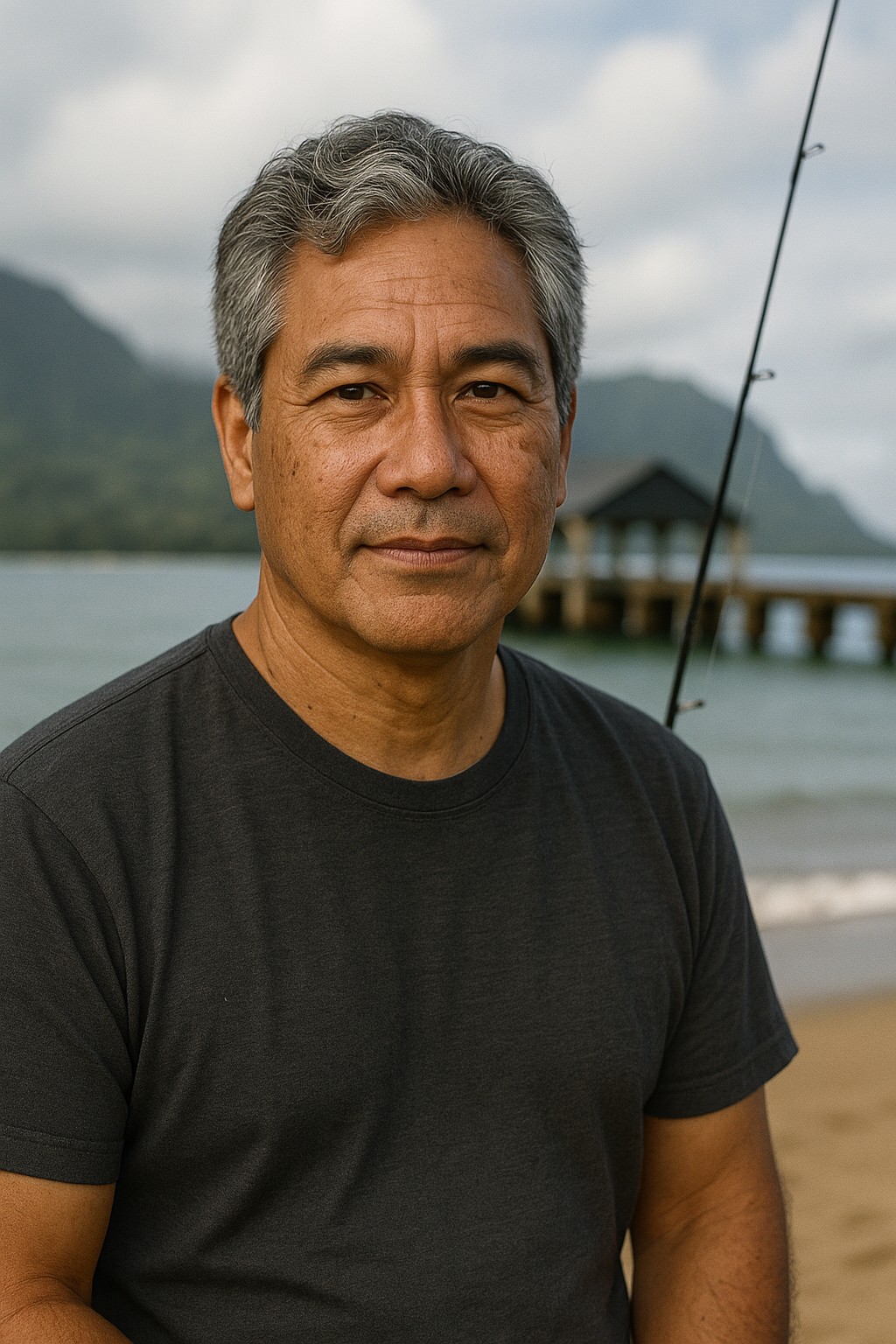
Kalani MillerAloha mai kākou. My name is Kalani Miller, and for as long as I can remember, the stories of this island have been my companions. To truly know Hawaiʻi, you must understand that our land is not silent. It holds memories. Certain places, what we call wahi pana, are more than just beautiful spots. They are sacred, storied sites that possess a spiritual power, a mana, that connects us to our kūpuna, our ancestors.
These places have a pulse, a life force sustained by the people and the events that shaped them. In our culture, which is steeped in a rich oral tradition, we learn through moʻolelo—stories, histories, and traditions that form the cornerstone of who we are. These are not myths or legends in the Western sense. They are our records, our truths, our way of understanding the achievements of our ancestors and the bounty of our land, our ʻāina.
When I walk these lands, from the sun-scorched shores of Hōnaunau to the windswept hills of Kohala, I feel the presence of those who came before. Their stories are written in the stones, the wind, and the sea.
This is an invitation to journey beyond the resorts and postcards, to listen to these stories. It is a journey through time, exploring the wahi pana that tell the epic moʻolelo of Hawaiʻi Island, from the foundations of our ancient society to the birth of a unified kingdom. This is not just about seeing historical sites. It is about learning to read the land and, in doing so, beginning to understand the very soul of Hawaiʻi.
Foundations of an Ancient World: Places of Law, Life, and Refuge
To understand the Hawaiʻi that existed for centuries before the first Western ships appeared on the horizon, one must grasp two fundamental concepts: the sacred laws that governed the spiritual world and the ingenious systems that sustained life in the physical world. On the Kona Coast, two powerful wahi pana stand as testaments to this sophisticated society. One tells a story of transgression and redemption, of life and death. The other speaks of community, sustainability, and the quiet rhythms of daily life. Together, they paint a vivid portrait of our ancient world.
Puʻuhonua o Hōnaunau: The Place of Absolute Refuge
Imagine a world governed by a complex and rigid set of laws known as the kapu system. These sacred prohibitions dictated everything from what you could eat and where you could walk to how you interacted with the aliʻi, the ruling chiefs. The penalty for breaking a kapu—whether intentionally or by accident—was swift and absolute: death. There were no prisons, no trials as we know them today. There was only one path to survival.
This is the moʻolelo of Puʻuhonua o Hōnaunau. If a person broke a kapu, or if they were a defeated warrior or a non-combatant in times of war, they had one chance. They had to run, swim, and scramble, eluding their pursuers, to reach the boundaries of a sacred place of refuge, a puʻuhonua. If they could make it inside these sacred grounds, they were safe. Here, a kahuna (priest) would perform a ceremony of absolution, cleansing the transgression and allowing the lawbreaker to return, forgiven, to society. It was a place of second chances, a sanctuary where divine mercy overruled mortal law.
The immense power of this place, its profound mana, was believed to emanate from the bones of 23 great chiefs interred within the Hale o Keawe, a sacred temple on the grounds. This ancestral power made the refuge absolute. When you walk the white sand paths under the swaying coconut palms at Hōnaunau today, the feeling is undeniable. It is a tangible peace. This wasn't just a haven from physical pursuit. It was a sanctuary for the spirit.
As a cultural practitioner, when I visit, I always take a moment to stand before the Great Wall and just breathe. You can still feel that power of forgiveness, of a second chance, radiating from the very stones.
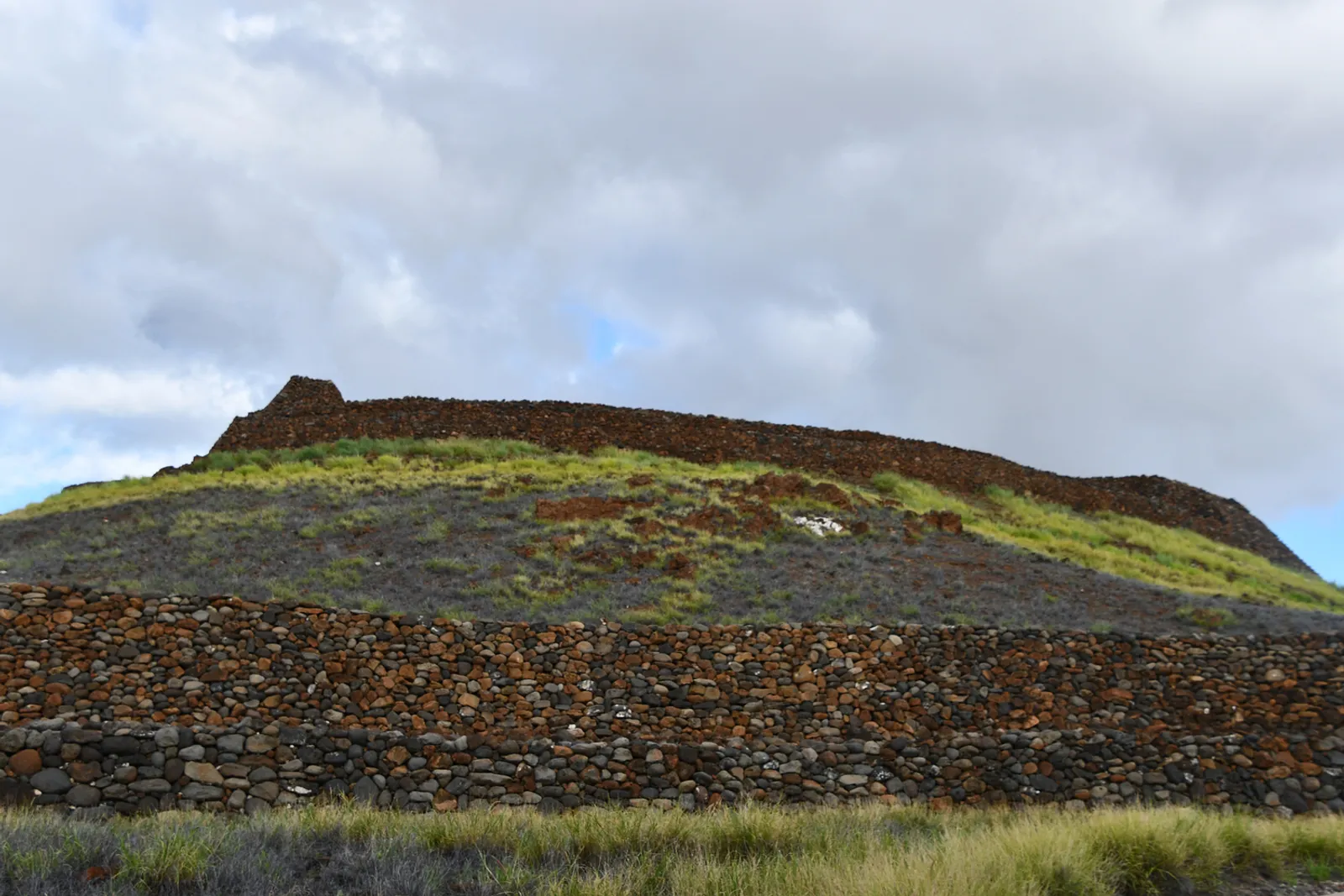
Puʻuhonua o Hōnaunau National Historical Park preserves this incredible site. As you explore, you will see the Great Wall, a masterful example of dry-stack masonry stretching over 1,000 feet long and standing up to 10 feet high. You will see the reconstructed Hale o Keawe, guarded by fierce-looking wooden images called kiʻi, which represent the gods and protect the sacred space. Take your time, walk with reverence, and listen to the story this sacred land has to tell.
Lapakahi State Historical Park: A Portrait of Village Life
If Puʻuhonua o Hōnaunau tells the story of high-stakes spiritual drama, Lapakahi State Historical Park, further north on the Kohala Coast, shares the quieter but equally profound story of daily life. Here, you can walk through the partially restored remains of a 600-year-old fishing village, offering a remarkable window into how our makaʻāinana (commoners) not only survived but thrived on this rugged coastline.
Lapakahi is a perfect illustration of the ahupuaʻa, the traditional land division that was the cornerstone of our sustainable society. An ahupuaʻa is a wedge-shaped slice of land running from the mountains (mauka) to the sea (makai), containing all the resources a community needed. The moʻolelo of Lapakahi is one of interdependence. Families living by the shore (makai) would fish, using clever lures like the luheʻe (a cowry shell and stone sinker) to catch heʻe (octopus) in Koaiʻe Cove. They would then trade their catch with their ʻohana (family) living further upland (mauka), who cultivated fertile volcanic soil to grow staples like kalo (taro) and ʻuala (sweet potato).
A stone-curbed trail, parts of which you can still walk today, connected these communities, allowing for the flow of goods: fish and paʻakai (sea salt) went up, while taro, sweet potatoes, and strong olonā fibers for making fishnets came down.
Lapakahi allows us to walk in the footsteps of these fishermen and farmers. It is less about the dramatic power of chiefs and more about the quiet genius of our ancestors. As you follow the self-guided interpretive trail, you can see the foundations of their world. Look for the hālau waʻa, the thatched canoe houses that protected their precious vessels. Notice the papamū, a smooth stone board used for playing kōnane, a game of strategy similar to checkers. You can see the hollowed stones where they evaporated seawater to make salt, and the remnants of their hale (houses), some with paved floors of smooth pebbles (ʻiliʻili) and stone lamp stands (waihona kukui) where they burned kukui nut oil for light.
Seeing these remnants, you understand how deeply they knew this land and sea. It was a life of balance, community, and profound ingenuity, written into the landscape itself.
Continue the Sacred Journey
Discover the epic rise of King Kamehameha I and the fateful encounters that changed Hawaii forever.
ℹ️ Sacred Sites Guide
- Sites Featured: 5 Sacred Places
- Time Needed: 2-3 days
- Best Time: Year-round
- Difficulty: Easy walking
🏛️ Featured Wahi Pana
- Puʻuhonua o Hōnaunau
- Lapakahi State Park
- Puʻukoholā Heiau
- Kamehameha Statue
- Kealakekua Bay
🙏 Practice Hoʻihi
- Respect all kapu signs
- Stay on marked trails
- Don't move rocks/stones
- Speak in quiet tones
📖 Sacred Stories
Current section
Rise of Kamehameha I
Part 3: Western ContactKealakekua Bay tragedy
Part 4: Visitor GuidePlanning your journey
📧 Cultural Stories
Get authentic Hawaiian stories and respectful travel tips from local cultural experts.