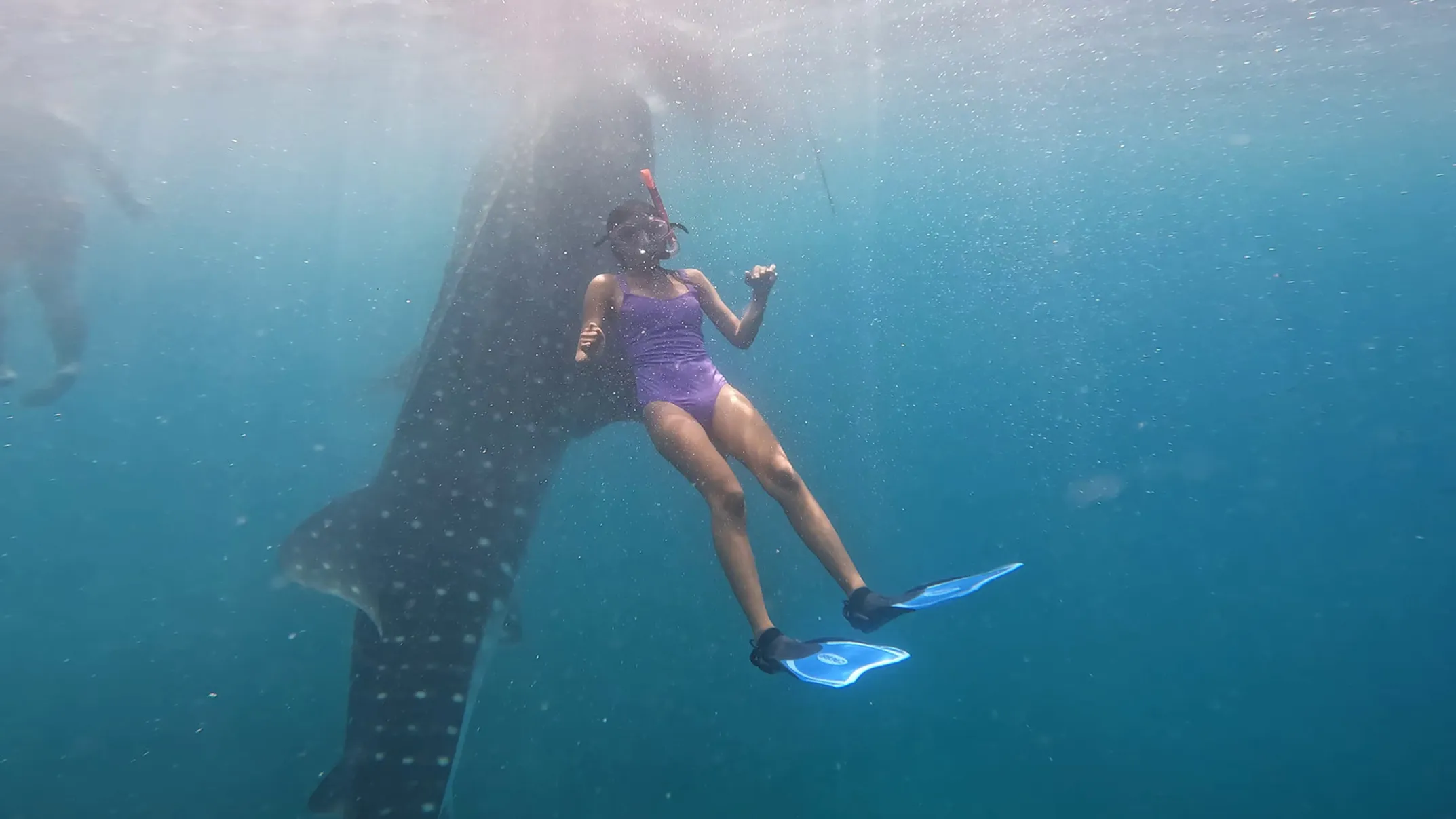
Under the Sea: Kalani's Top Snorkeling Spots
Discover the Big Island's underwater world where volcanic coastlines create diverse marine habitats

Written by a Local Expert
Kalani MillerUnder the Sea: Kalani's Top Snorkeling Spots
The Big Island's volcanic coastline creates an underwater world that is just as diverse as its shores. From calm, protected coves teeming with fish to dramatic drop-offs, there's a snorkeling experience for everyone. Here are my two top picks, for very different reasons.
The volcanic coastline doesn't just create dramatic beaches above water - it sculpts incredible underwater landscapes where coral gardens thrive and marine life flourishes in protected bays and dramatic drop-offs.
Kahaluʻu Beach Park: The Beginner's Aquarium
This is, without a doubt, the number one spot I send families and first-time snorkelers. Kahaluʻu is less a beach and more a giant, calm, natural swimming pool. It's often called a "real life aquarium," and for good reason. The moment you step into the water, you'll be greeted by schools of curious fish. The marine life here is incredibly abundant and unusually tame, accustomed to the presence of swimmers.
The vibe is family-friendly, educational, and can get busy, but there's a wonderful energy to the place. It's located just south of historic Kailua-Kona, making it incredibly convenient. The park has a full suite of amenities: lifeguards, restrooms, showers, and picnic pavilions. There's even a gear rental van, affectionately known as the "Snorkel-mobile," located right across the street.
The Safe Entry Method
The shoreline is mostly sharp, slippery lava rock. Here's the local-proof way to get in safely:
- • Look for the main lifeguard tower
- • Find the small, sandy-bottomed channel directly in front of it
- • Walk carefully over the rocks holding your gear
- • Sit in the shallow, sandy area to put on mask and fins
- • Push off into the water from there
The bay is protected by a man-made breakwater, which keeps the water calm, but there is a mild current that flows north, so it's wise to periodically check your position. You'll see an incredible variety of fish, including yellow tang, parrotfish, and butterflyfish, and it's one of the most reliable places to see honu feeding on the seaweed (limu) that grows on the rocks.
Community Conservation
As a testament to the community's commitment to protecting this special place, you'll find free reef-safe sunscreen dispensers at the pavilion—a wonderful initiative to support coral health.
Hōnaunau Bay (Two Step): The World-Class Drop-Off
When I want spectacular water clarity, healthy coral gardens, and the thrilling feeling of floating over the deep blue abyss, I go to Two Step. This is not a beginner's spot; this is for the confident swimmer who is ready for a truly world-class snorkeling experience. The water here is deep, the coral formations are vast, and the visibility can be astounding.
The vibe is one of awe and reverence. It's a hub for serious snorkelers, free divers, and scuba divers who come for the pristine conditions. There are no real facilities here, aside from a few portable toilets, and parking is limited to the shoulder of a narrow residential road, so please be very respectful of driveways and private property.
Perfect Cultural Pairing
Two Step sits directly adjacent to Puʻuhonua o Hōnaunau National Historical Park, one of Hawaii's most sacred sites. I always recommend visitors plan a half-day excursion:
- • Arrive in the morning and spend 1-2 hours walking through the puʻuhonua (place of refuge)
- • Learn about ancient Hawaiian culture and the mana of this sacred ground
- • Then walk next door to cool off in the bay
- • The cultural context enriches the entire experience
The name "Two Step" comes from the entry point: a natural, two-tiered lava rock shelf that allows for a direct entry into deep water. Sit on the edge, put on your gear, and slide in. It's important to time your entry and exit with the ocean surge, especially if the water is not perfectly calm, to avoid being pushed against the rocks.
Once in, you'll be floating over coral gardens that are 15-20 feet below, with the seafloor dropping off into the deep blue. This is where you have the best chance of seeing spinner dolphins resting in the bay, though please remember the new federal law: it is illegal to approach or swim within 50 yards of them. Give them their space; their presence alone is a gift.
Entry & Exit Tips
- • Time your entry/exit with the ocean surge
- • Use the natural two-step lava rock formation
- • Sit on the edge to put on gear before sliding in
- • Be confident in deep water - it's 15-20 feet immediately
- • Watch for dolphins but maintain 50-yard distance
Explore More Beach Adventures
From underwater worlds to unique sand colors, the Big Island offers endless coastal discoveries.
🏖️ Beach Guide Navigation
🤿 Snorkeling Levels
Beginner • Shallow • Protected
Advanced • Deep • Open Ocean
🐠 Marine Life to Spot
- Yellow Tang
- Parrotfish
- Butterflyfish
- Hawaiian Green Sea Turtles (Honu)
- Spinner Dolphins (at distance)
- Moorish Idols
⚠️ Safety Reminders
- Never snorkel alone
- Check conditions with lifeguards
- Stay 50 yards from dolphins
- Don't touch coral or marine life
- Use reef-safe sunscreen
🛍️ Gear & Rentals
- Kahaluʻu: "Snorkel-mobile" van
- Two Step: Bring your own
- Mask/Snorkel: $10-15/day
- Fins: $8-12/day
- Full Set: $20-25/day