A Palace of Many Stories
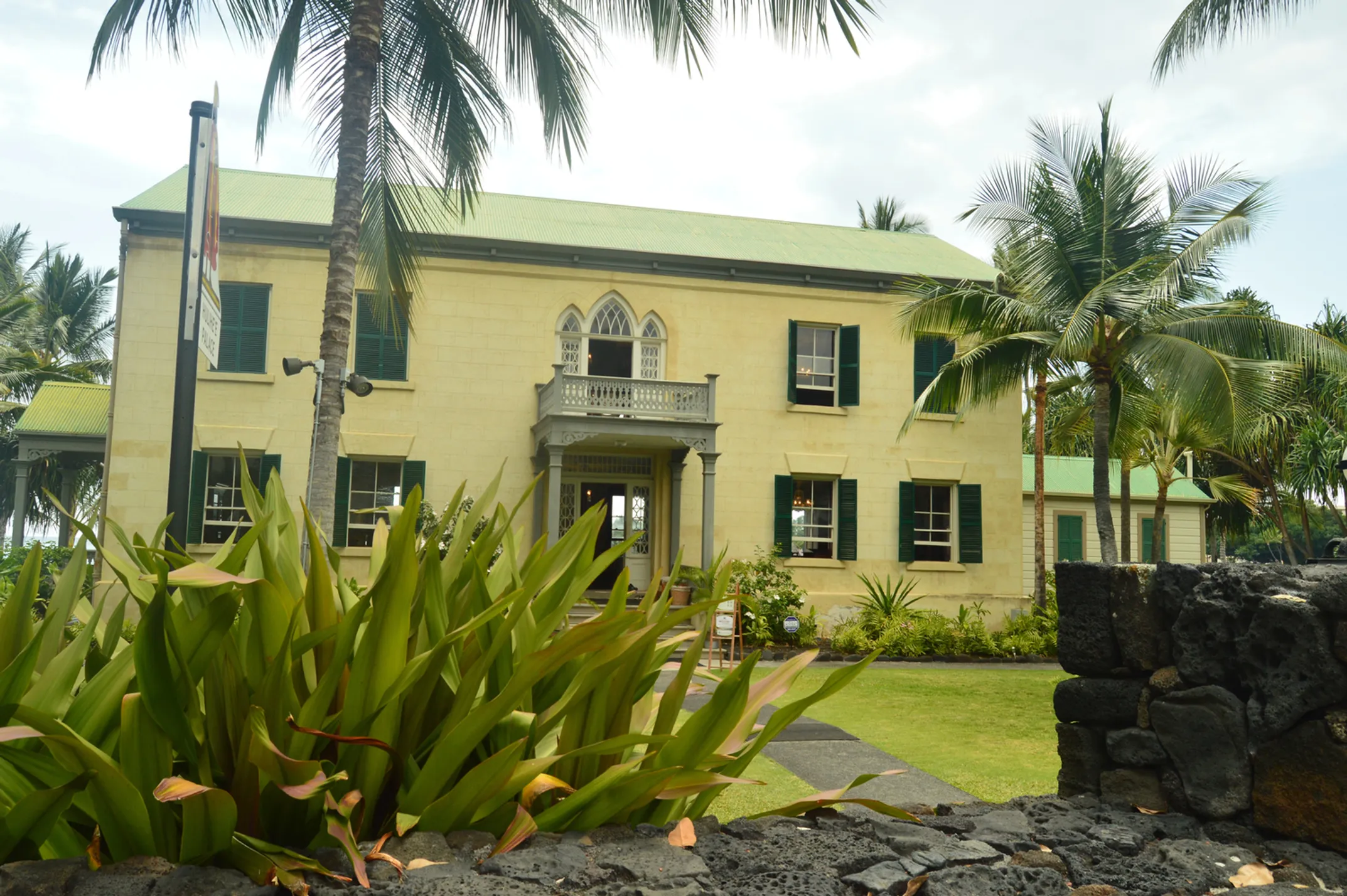
After Governor Kuakini's death in 1844, Huliheʻe Palace began its life as a beloved retreat for Hawaiian royalty. Its story isn't about one family. It's about a series of powerful people, each leaving their mark on its character and its mana.
The palace passed from Kuakini to his hānai son, William Pitt Leleiohoku, who died only months later. It then passed to his wife, Princess Ruth Keʻelikōlani, then to her cousin Princess Bernice Pauahi Bishop. Finally, it was bought in 1885 by the last king of Hawaiʻi, David Kalākaua. More than any other home in Hawaiʻi, Huliheʻe became a home to many royals. A quiet stage for the drama of the kingdom.
The Governor's Pride, The Princess's Heart: Princess Ruth Keʻelikōlani
Of all the aliʻi connected to Huliheʻe, none shows its complex spirit more than Princess Ruth Keʻelikōlani. A great-granddaughter of Kamehameha I, she was one of the wealthiest and most powerful women in the kingdom. She served as Governor of Hawaiʻi Island for nearly twenty years. She was a strong guard of Hawaiian ways in an era of huge change. Though educated in English, she refused to speak it. She conducted all her business in ʻōlelo Hawaiʻi.
Her connection to Huliheʻe shows deep contrasts. Despite owning this grand, Western-style stone palace, she preferred to live and sleep in a traditional hale pili. A large, beautifully built grass house that she had put up on the palace grounds. This wasn't just a personal choice. It was a living statement of her identity.
In this act, she showed the duality of her time. The palace, with its solid walls and foreign design, was there for official functions. For entertaining visiting royalty like Kamehameha IV and Queen Emma. For showing an image of modern times. But the hale pili, open to the breezes and built of the land, was her true home. The center of her personal mana.
It was a statement that while she could command the new world, her heart and soul stayed rooted in the old.
🏰 The Stone Palace
Used for official functions and entertaining visiting royalty - a symbol of modern Hawaii's place in the world.
🌿 The Hale Pili
Her true home - a traditional grass house where she lived and slept, staying connected to Hawaiian ways.
The grounds of Huliheʻe became a landscape of this cultural tension. A stone mansion and a grass house, side by side, looking out over the Pacific. It was to this place of peace that Princess Ruth returned when she became very ill in Honolulu in 1883. Seeking the healing air of her beloved Kona, she passed away not in the palace, but in her hale pili. Surrounded by the traditions she so fiercely protected.
Her passing filled the very soil with deep feeling. A final, powerful connection between this aliʻi nui and her cherished home.
The Merrie Monarch's World Stage: King Kalākaua's Grand Change
When King David Kalākaua bought Huliheʻe Palace from the estate of Bernice Pauahi Bishop in 1885, he brought a new and global vision. Having become the first monarch in history to travel around the globe in 1881, Kalākaua had seen the grand palaces of Europe and Asia. He returned with a strong desire to position his kingdom as a modern, sophisticated, and equal nation on the world stage. His palaces were to be a key part of this diplomatic show.
✨ Victorian Elegance
Covered the lava rock walls with stucco, giving it a refined Victorian look to match European palaces.
🏖️ Ocean Views
Widened the oceanfront lanais to take advantage of the spectacular Kailua Bay views.
💎 Luxury Details
Added crystal chandeliers, gold leaf molding, and even installed one of the island's first telephones in 1888.
He renamed the palace Hikulani Hale, meaning "House of the Seventh Ruler". A clear statement of his own royal legacy on the site.
This changed palace became his cherished retreat. A place of both celebration and refuge. It was here that he hosted the grand parties, lūʻau, and hula performances that earned him the beloved nickname, "The Merrie Monarch". An 1898 account paints a vivid picture of these gatherings on the lawn, with Kalākaua's "celebrated red chairs were set in rows" for his guests.
The palace also became his safe place after the huge political pressure of the 1887 Bayonet Constitution. This stripped the monarchy of much of its power. In the quiet of his Kona home, surrounded by the beauty of the coast, he could find rest from the trouble in Honolulu.
Whispers of a Lost Future: The Sad Legacy of Princess Kaʻiulani
Princess Victoria Kaʻiulani, the "Hope of a Nation," never lived at Huliheʻe. Yet her spirit is part of its story. Her connection is woven through the lives of the aliʻi who did. Her godmother was the powerful Princess Ruth, who had gifted the 10 acres of Waikīkī land where her father built the famous ʻĀinahau Estate with its beloved peacocks.
Inside the palace today, you can find artifacts that connect directly to her. Most notably a beautiful wardrobe of koa and kou wood that was later bought and returned to the palace by the Daughters of Hawaiʻi. Her story is one of the great tragedies of the Hawaiian Kingdom.
Educated in Europe to prepare her to one day lead her people, she returned to fight bravely but without success against the overthrow and takeover of her homeland. She visited Washington D.C. to plead her case. She charmed President Grover Cleveland, but the political tide was against her. She died of illness, heartbroken, at the young age of 23.
To remember her story while standing in a place so central to her family is to feel the full weight of what was lost. A place owned by her godmother. Renovated by her uncle King Kalākaua. The monthly concerts held on the palace lawn often honor her memory. Keeping the story of Hawaiʻi's last heir to the throne alive.
🗺️ Explore Huliheʻe Palace
📅 Royal Timeline
-
1838-1844
Governor Kuakini builds & lives in palace
-
1844-1883
Princess Ruth's era - traditional & modern
-
1885-1891
King Kalākaua's Victorian transformation
👑 Royal Facts
- Princess Ruth refused to speak English, conducting all business in Hawaiian
- King Kalākaua was first monarch to travel around the world
- Palace had one of Hawaii's first telephones in 1888
- Princess Kaʻiulani's wardrobe is still displayed in the palace
🚶♀️ Continue Your Journey
Now that you know the royal residents, take a detailed tour through the palace rooms.
Take the Palace Tour