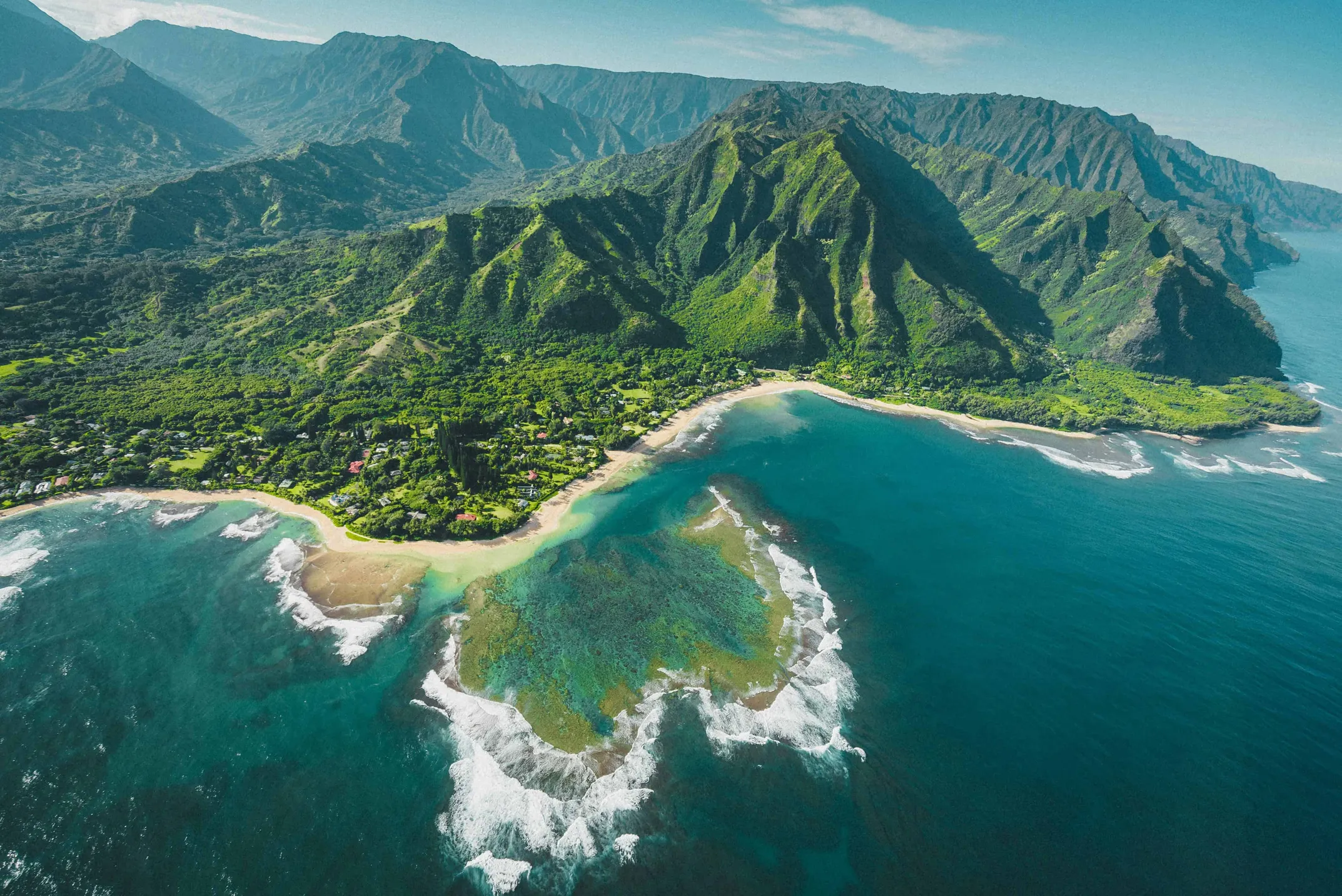
Downtown Hilo
Tsunami Survivors, Vintage Theaters & the Soul of Hawaii's Rainforest Capital

Written by a Local Expert
Leilani AkoThe Scent of Rain and Resilience
There's a certain scent to Hilo that you won't find anywhere else in Hawaiʻi. It's the smell of rain on warm asphalt. A sweet, earthy perfume hangs in the air. It's the fragrance of ginger blossoms and damp ferns from the rainforest. The jungle presses in on the town. Nature isn't just a backdrop here. It's an active participant.
To the first-time visitor, Hilo might seem like the "rainy city." A quiet counterpart to Kona's sun-drenched shores. But to truly know Hilo is to understand something deeper. It's a city defined by water in all its forms. The life-giving showers feed its lushness. The tranquil bay has centered its commerce for centuries. The devastating waves have twice tried to break its spirit. And failed.
This guide is an invitation to look beyond the postcard image. We're going to find the true pulse of downtown Hilo. We'll bypass the surface checklists. We'll connect with the city's living, breathing heart. This is a journey into a town of survivors, artists, storytellers, and innovators.
A City Forged by Water and Will
To walk through Downtown Hilo is to walk through a story of survival. The city's serene bayfront isn't simple urban planning. Those wide-open parks and gentle shoreline are a hard-won scar. A testament to the community's deep respect for the ocean's power. Hilo's modern identity was forged in the fire of two major tsunamis. In 1946 and 1960. Events that didn't just destroy buildings. They reshaped the town's geography and its soul.
Understanding this history is the first step to understanding Hilo itself. The stories of those who lived through the tsunamis aren't relics of the past. They are foundational stories that echo in the city's memory. These aren't just tales of disaster. They're stories of shock, tragic mistakes, and incredible strength.
🌊 The 1946 Tsunami
96 lives lost when waves from an Aleutian earthquake erased the bustling Japanese fishing village of Shinmachi.
⏰ The 1960 Tsunami
61 lives lost due to unclear evacuation warnings. The frozen clock at 1:04 AM still marks the moment.
🏛️ Pacific Tsunami Museum
Housed in the 1930 Bishop Bank building that survived both tsunamis, preserving survivor stories.
🌺 Memorial Parks
The beautiful bayfront parks serve as both recreation space and tsunami buffer zone.
Explore Downtown Hilo's Stories
From tsunami survivors to cultural renaissance, discover the soul of Hawaii's rainforest capital.
ℹ️ Quick Info
- Best Time: Year-round
- Weather: Rainy, tropical
- Parking: Street & lots
- Walking: Very walkable
- Population: ~45,000
🎭 Must-See Attractions
- Pacific Tsunami Museum
- Palace Theater (1925)
- Hilo Farmers Market
- Lyman Museum
- Liliʻuokalani Gardens
- Rainbow Falls (nearby)
🍽️ Local Specialties
Born in Hilo at Lincoln Grill
Rambutan, dragon fruit, lilikoi
Mauna Loa factory nearby
Traditional taro at farmers market
🎪 Cultural Events
- Merrie Monarch Festival April
- First Friday Art Walk Monthly
- May Day Celebrations May 1
- Black & White Night Annual
The Day the Bay Emptied Out: Echoes of 1946 & 1960
On April 1, 1946, an earthquake in the Aleutian Islands sent waves racing across the Pacific. In Hilo, many residents watched in disbelief as Hilo Bay emptied out. Joan Yamamoto Shaw was just eight years old. Her mother thought the waves would be small. She told her children, "Come and look at the water in Hilo Bay. You will see something you will never see again for maybe another fifty years."
This initial awe quickly turned to panic. The first wave was higher than expected. As the second, larger wave came in, Joan's mother broke out the kitchen windows with a hammer. She needed an escape route. Joan, a curious child, ran back to the front window. She saw a terrifying wall of water carrying huge boulders. The apartment wall collapsed. It trapped her foot. "Oh, is this how it feels to die?" she thought. Her mother pulled her to safety on a floating rooftop.
The tsunami completely erased the bustling Japanese fishing village of Shinmachi. Joan's family lived there. The wave claimed 96 lives in Hilo.
Fourteen years later, on May 23, 1960, disaster struck again. A massive earthquake in Chile generated a tsunami. This one proved even more tragic due to a fatal misunderstanding of the warning system. Sirens sounded more than three hours before the waves arrived. But the signals were unclear. Many people evacuated but then returned to their homes in the low-lying areas. They heard that the first waves were small. They thought the danger had passed. They were caught by the third wave. It was the largest and most destructive. This wave claimed 61 lives in Hilo.
Walking the Tsunami Zone
Today, you can trace this history on a self-guided tsunami history walking tour. The landscape itself is a memorial.
The Frozen Clock
Outside the former Hilo Iron Works, an iconic clock is permanently stopped at 1:04 a.m.—the exact moment the 1960 tsunami struck.
This walk reveals a fundamental truth about Hilo. Its urban design is a direct response to its history of natural disasters. The beautiful bayfront parks aren't just for recreation. They're a buffer zone. A conscious decision made by a community that learned a hard lesson about the power of the sea.