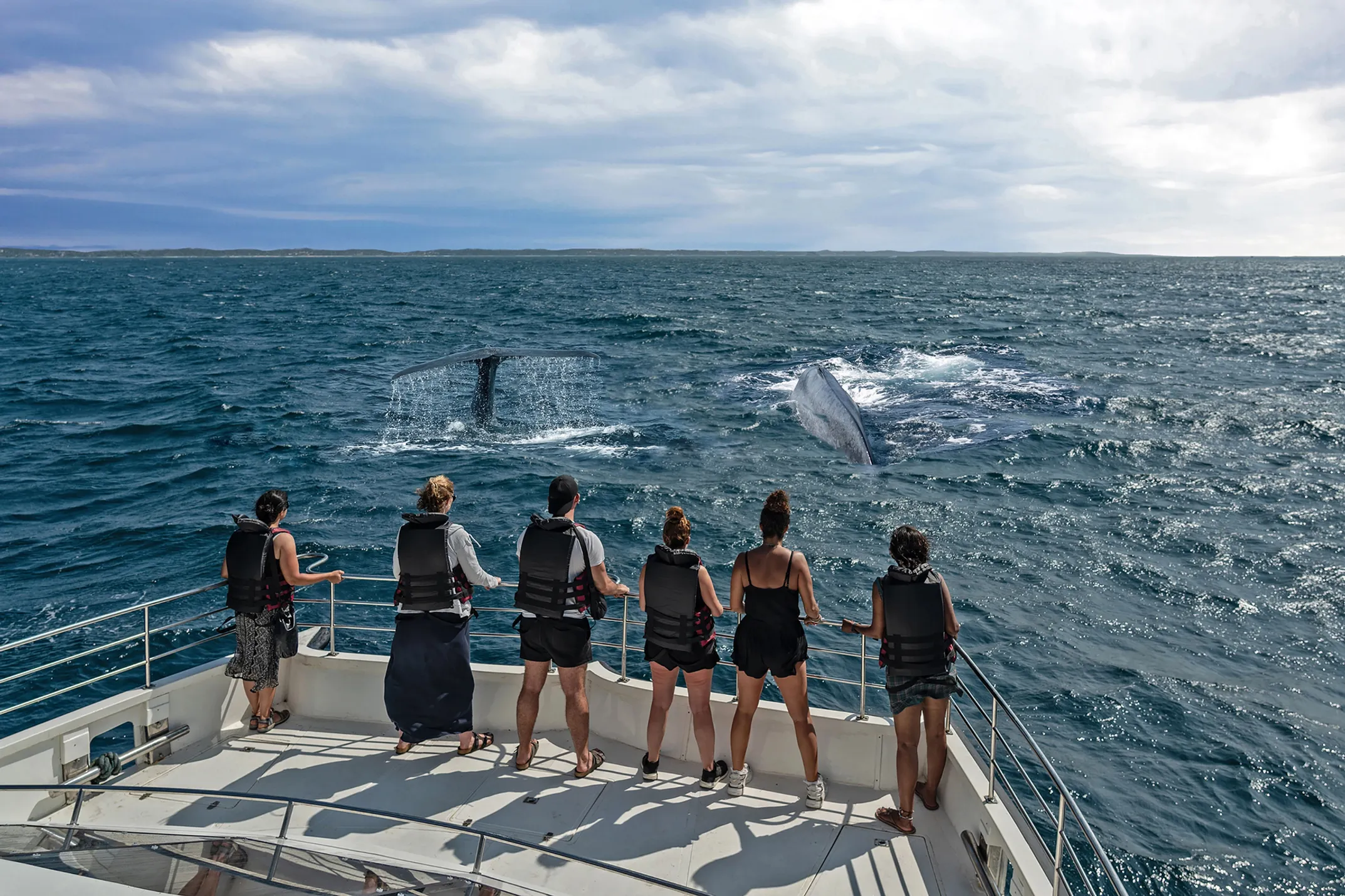
The Spirit of Aloha: Responsible Whale Watching
Our kuleana (responsibility) to protect these magnificent visitors

Written by a Local Expert
Kalani MillerThe Spirit of Aloha: Respectful Whale Watching (Kuleana)
The koholā are our guests. They choose to come here to bring new life into the world. It is our kuleana—our shared responsibility and privilege—to treat them with the utmost respect. This means giving them space and ensuring our presence doesn't cause them harm or stress.
The Law is Clear: Give Them Space
Federal and state laws are in place to protect these animals. The rule is simple and absolute:
It is illegal for any person or vessel (including boats, kayaks, paddleboards, swimmers, etc.) to approach a humpback whale within 100 yards (90 meters) in Hawaiian waters.
That's the length of a football field. For all aircraft, including drones, the minimum altitude is 1,000 feet (300 meters).
These laws aren't arbitrary. They exist to prevent us from disturbing the whales' natural and vital behaviors like resting, nursing, and mating. Causing stress to a mother and her calf can impact their health and chances of survival.
Be Whale Wise: My Code of Conduct
Beyond the law, being a respectful observer means following a code of conduct.
❌ Never Pursue or Encircle
If you're in a vessel, approach slowly and maintain a course parallel to the whale's direction of travel. Never leapfrog ahead or surround them.
🎁 If a Whale Approaches You
Stop. This is a gift! If you're in a boat, put the engine in neutral (don't turn it off) and let the whale pass. Enjoy the magical moment.
👶 Extra Space for Mothers & Calves
They are the most vulnerable. Never position your vessel between a mother and her calf. Give them even more distance than the legal minimum.
⏱️ Limit Your Viewing Time
A good practice is to stay no longer than 30 minutes with any single group of whales before moving on, minimizing your impact.
👀 Look for Signs of Disturbance
If whales change behavior abruptly, slap tails repeatedly, or try to move away, it's a clear signal to slowly and quietly leave the area.
📢 Report Violations
If you witness harassment or see an injured animal, report it immediately. You're helping protect these magnificent creatures.
Be a Guardian of the Ocean
You can be an active participant in protecting our marine life. If you see an animal in distress or witness a violation, you can help.
To report an injured, entangled, or stranded marine mammal:
Call the NOAA Marine Mammal Hotline at 1-888-256-9840
To report a violation of the approach rule or other harassment:
Call the NOAA Fisheries Enforcement Hotline at 1-800-853-1964
For more detailed information, I encourage you to visit the official websites for the Hawaiian Islands Humpback Whale National Marine Sanctuary and NOAA Fisheries.
Beyond the Whales: Your Complete Hawaiian Adventure
The magic of the koholā is a highlight of any winter trip to Hawaiʻi, but the spirit of adventure and history is alive year-round across our islands. If your journey takes you to Oʻahu, here are two experiences that offer a different, but equally powerful, perspective on Hawaiʻi.
For the Thrill-Seeker
Coral Crater Adventure Park (Oʻahu)
For a different kind of high-flying action, Coral Crater Adventure Park on Oʻahu is the island's premier playground. They offer everything from thrilling zipline courses with six different lines that send you soaring over the landscape, to rugged off-road ATV tours and a massive Adventure Tower with climbing walls and aerial obstacle courses.
Visit coralcrater.comFor the History Buff
Pearl Harbor National Memorial (Oʻahu)
To connect with a pivotal moment in world history that unfolded on our shores, a visit to the Pearl Harbor National Memorial is a must. The quiet reverence you feel at the USS Arizona Memorial is incredibly powerful. It's a place of remembrance and honor that tells a crucial part of Hawaiʻi's story.
Visit pearlharbor.orgA Shared Kuleana
Seeing a 40-ton animal launch itself into the sky is a sight that changes you. It connects you to something ancient, wild, and powerful. These koholā make their incredible journey year after year, trusting our waters to keep their children safe. It's a sacred trust. When you leave our islands, I hope you take with you not just photos, but a sense of that kuleana—that shared responsibility to protect these magnificent creatures and the ocean that is their home and our lifeblood.
I encourage you to support our responsible, locally-owned tour operators, to always follow the viewing guidelines, and to share what you've learned about the importance of conservation.
Mahalo for listening, and I hope to see you on the water.
— Kalani Miller
Explore Our Complete Whale Watching Guide
Return to any section of our comprehensive Big Island whale watching guide
⚖️ Legal Requirements
- Distance: 100 yards
- Drones: 1,000 feet
- Applies to: All vessels
🚨 Emergency Contacts
Injured Marine Mammal:
1-888-256-9840Report Violations:
1-800-853-1964🔗 Whale Watching Guide
Why whales come here
Season PlanningBest time to visit
Tour OptionsChoose your vessel
Shore ViewingFree viewing spots
Current page