
2 Hour Afternoon Adventure Snorkel
The Magic Merman Snorkel Charters (Au Au Kai, Inc) • Snorkel • Lahaina • Maui
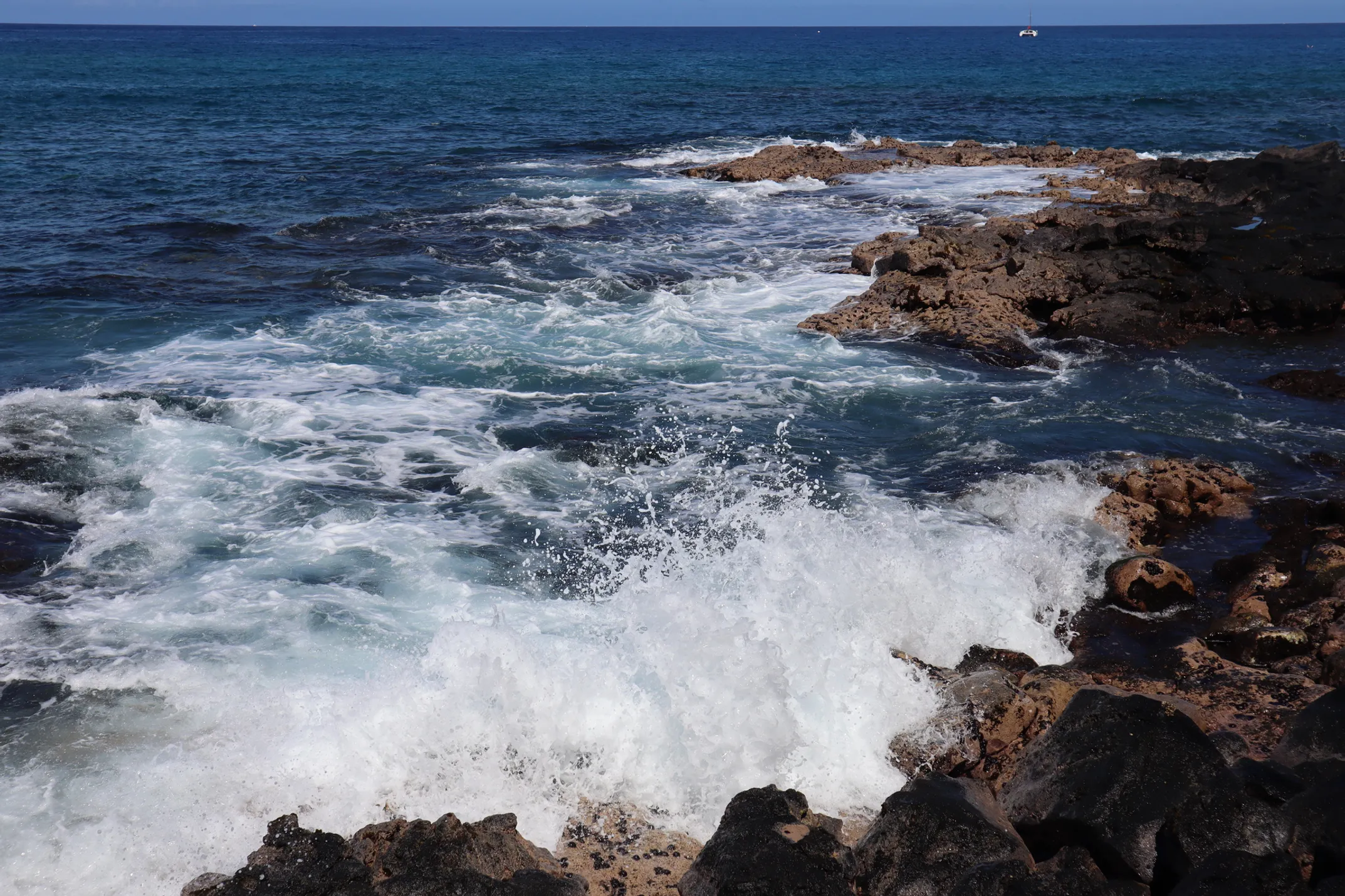
Step-by-Step Guide to Richardson's Underwater World
Written by a Local Expert
Kalani MillerOne of the reasons I recommend Richardson's so often, especially for families, is the variety of easy and safe entry points. You can choose your comfort level.
The most popular and straightforward way to get into the water is from the small, gently sloping black sand beach located at the edge of the park. The gradual entry allows you to wade in at your own pace, making it ideal for young children or anyone who is a bit hesitant about getting into the ocean. It's a simple, no-fuss entry that gets you right into the heart of the action.
Look closely near the main cove, and you'll find one of Richardson's most unique and helpful features: a set of county-maintained metal stairs, just like you'd find at a swimming pool, that lead directly into the water. This is my top recommendation for anyone who wants an exceptionally stable and easy entry and exit. There's no wading over rocks or sand—you just walk down the steps and glide into the water.
You will see some people entering the water from various points along the lava rock shoreline. While possible, I only recommend this for experienced snorkelers who are confident in their footing.
If you plan to walk on any of the lava rock, or even on the black sand, you absolutely must wear water shoes, reef walkers, or traditional Japanese tabi. The lava rock is incredibly sharp and can easily cut your feet. On a sunny Hilo day, that same black rock absorbs the heat and can become hot enough to cause serious burns. Even the black sand can be rough and hot, so proper footwear will make your entire day more comfortable and safe.
Once you're in the water, the whole cove is your playground, but certain areas offer different experiences. Think of this as your virtual tour of the bay's best spots.
As you enter the water, head towards the right (east). The reef here is shallower and features more delicate coral formations. This area often acts as a nursery for smaller reef fish. It's a fantastic place to start, get comfortable with your gear, and marvel at the schools of colorful juvenile fish.
The heart of the snorkeling experience is the shallow coral ridge that runs through the middle of the bay, with depths ranging from 3 to 6 feet. This is where you'll find the most abundant and healthy coral growth and the highest concentration of fish. It's a bustling underwater highway of marine life.
Within the protected bay but closer to the shore, you'll find slightly deeper patches of water, some reaching up to 15 feet. The visibility might be a touch lower here, but it's a great place to look for larger fish and to spot moray eels peeking their heads out of their rocky dens.
You don't have to swim far to see the stars of the show. The honu are frequently found very close to shore, especially along the rocky ledges, where they graze on their favorite limu. Remember to watch from a distance and let them eat in peace.
One of the greatest joys of snorkeling at Richardson's is the sheer diversity of life. To help you identify what you're seeing, I've put together a checklist of the most common residents. It turns your snorkel from a casual swim into a real-life treasure hunt.
Bright yellow, disc-shaped body with a white scalpel-like spine near the tail. Often seen in large, vibrant schools. Look for them grazing on algae on the reef flats and over coral heads, especially in Zone 2.
Yellow body with two distinct white-ringed black spots on each side. Graceful swimmers, usually seen in monogamous pairs. You'll spot them flitting amongst the coral branches throughout the bay.
Silvery-white body with thin, vertical black stripes, resembling a prison uniform. Forms large, busy schools. Very common in the shallower areas near the black sand beach entry.
Large, heavy-bodied fish with brilliant, often psychedelic colors (blues, greens, pinks). They have fused teeth that form a beak, which you can often hear crunching on the coral. Look for them actively scraping algae from rocks and coral throughout the bay. They are the architects of our white sand beaches!
A beautiful eel with a yellowish-green body covered in a wavy, dark brown pattern. Can look intimidating but is generally shy. You'll find them peeking their heads out from crevices and holes in the lava rock formations in Zone 3.
Named for the black "mask" over its eyes. Has an orange-yellow body with diagonal dark stripes and a black "scarf" over its back. Common throughout the reef, often seen picking at coral.
Unmistakable with bold vertical black, white, and yellow bands, a long snout, and a trailing dorsal fin filament. Often seen gliding gracefully, alone or in small groups, over the central reef.
Hawaiʻi's state fish! A true work of art with geometric blocks of yellow, black, and blue, and a "trigger" spine it can lock upright. Often found near sandy patches or rubble, foraging for food.
Learn about the sacred honu encounters and discover the heart of Richardson's - the Ocean Center and its incredible community programs.
Next: Ocean Center & Marine LifeWelcome & overview
You are here
History & community programs
Part 4: Visitor GuidePractical info & planning
Get the latest Hawaii snorkeling guides and marine life spotting tips.
The Magic Merman Snorkel Charters (Au Au Kai, Inc) • Snorkel • Lahaina • Maui

The Magic Merman Snorkel Charters (Au Au Kai, Inc) • Snorkel • Lahaina • Maui
YOLO Hawaii LLC • Snorkel • Honolulu • Oahu