
Breathing Hōnaunau
A Journey Through Law, Life, and Forgiveness at Hawaiʻi's Place of Refuge
Written by a Local Expert
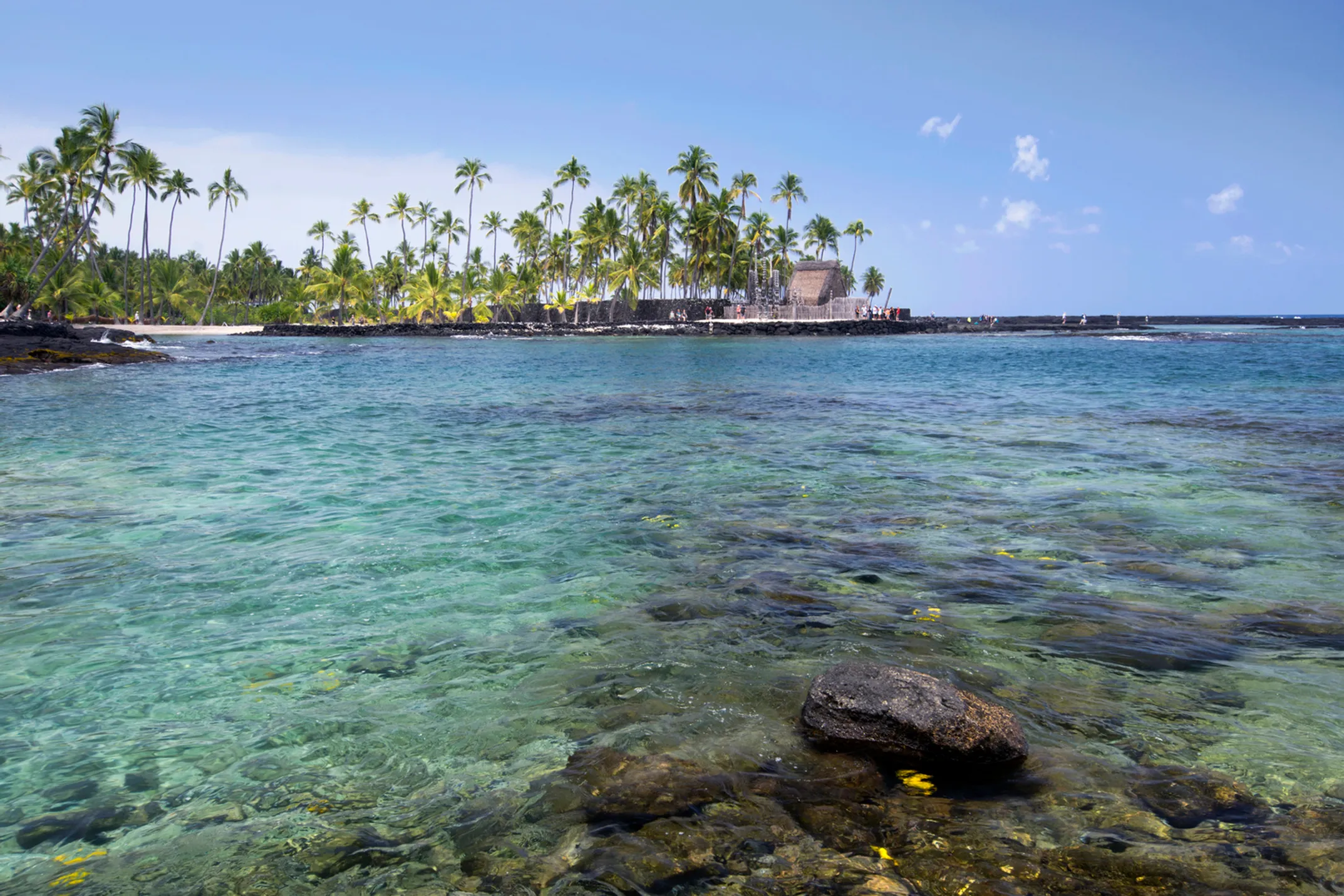
Leilani AkoSome places hold more than soil and stone. They hold stories. They hold history, prayers, and hope. Here on the Kona Coast, black lava meets bright blue Pacific water. This is a special place. A wahi pana, a sacred place, that lives in my heart. This is Puʻuhonua o Hōnaunau.
I write about my ancestors' stories. This land speaks to me. It shows two worlds side by side. One world had strict laws. The gods and chiefs ruled without question. The other world offered mercy. A person could start fresh here. A wall separates them. But it's more than stone. It's a line between judgment and forgiveness. Between death and second chances.
This is the last true place of refuge in all of Hawaiʻi. It breathes with mana, spiritual power from centuries past. When you walk here, you feel it. The coconut palms rustle. Salt spray kisses old stones. Deep quiet swallows modern noise.
This guide is my gift to you. We'll walk through a National Historical Park. But really, we're walking into the Hawaiian soul. I want to show you the world of chiefs. We'll cross the Great Wall together. We'll enter the place where life was renewed. Then we'll move from sacred ground to sacred water. Hōnaunau Bay sits right next door. Its colorful reef offers its own kind of peace.
E komo mai. Welcome. Let's walk and listen to the stories this land tells.
Part I: The Weight of the World, The Hope of Refuge
To understand why refuge was needed, you must know the world that made it necessary. It was a world of strict rules. One wrong step could end your life. This wasn't just law. It was how the universe worked.
The World of Kapu - Life on a Knife's Edge
Forget the simple word "taboo." The kapu system was much deeper. It was the sacred rules that ordered old Hawaiian society. These laws kept balance between humans, nature, and the gods. Breaking kapu wasn't just a crime against a chief. It was a spiritual crime. It could destroy the whole community. The gods might send famine or disaster. This is why punishment was so harsh. A whole village would turn on one person to restore balance.
The laws were part of daily life. The most basic was ʻai kapu, or sacred eating laws. Men and women couldn't eat together. A husband had to make two separate earth ovens. One for himself, one for his wife. This was hard work. For women, certain foods were forbidden. They were physical forms of the male gods. Eating pork meant eating the body of Lono. Most bananas were Kanaloa. Coconut was Kū. A woman caught eating these foods would die.
Respect for the aliʻi (chiefs) was another key rule. They were descendants of the gods. Their mana was sacred and dangerous. A common person whose shadow fell on an aliʻi's house could be killed instantly. This included their path or belongings. To prevent accidents, the highest chiefs often stayed indoors during the day. They only came out at night.
Even the land and sea had kapu. Some fishing areas might be off-limits. This saved resources for the future. Catching fish out of season was a crime punishable by death. The system was absolute. The law officer, the ʻilamuku, would hunt down lawbreakers. They faced death by clubbing, stoning, or drowning. No trial. No appeal.
The harshness touched everyone, even children. One story tells of a five-year-old girl caught eating a banana. The high chief was merciful because of her age. Instead of death, he ordered one of her eyes removed.
This was the world outside the walls of the Puʻuhonua. It had deep spiritual meaning and order. But it was also a world of constant pressure. Life or death hung in the balance every day.
🍽️ ʻAi Kapu (Sacred Eating)
Men and women ate separately. Women couldn't eat pork, most bananas, or coconuts. These foods were the gods' physical forms. Breaking this law meant death.
👑 Aliʻi Kapu (Chief Rules)
A common person's shadow couldn't touch an aliʻi, their home, or belongings. Looking directly at a high chief was also forbidden. Chiefs were god descendants with dangerous spiritual power.
🌊 Resource Kapu
Certain fish couldn't be caught during specific seasons. Some forests or lands were off-limits. These rules helped resources recover. They kept the community alive.
The Race for Life - A Journey to Hōnaunau
Picture this scene. You are Kaelo, a fisherman from a village up the coast. Your net is your life. The sea feeds your family. Today, a school of fish runs like you've never seen. In your excitement, you cast your net into a small cove. But this cove belongs to the chief's private stores. Someone sees you.
A cry goes up. Not anger, but deeper fear. Kapu! The word cuts through the air. The balance is broken. The gods are angry. Your friends and neighbors look at you with terror. They are no longer your community. They are your hunters. The ʻilamuku will come. There is no trial. Only the chase.
You run.
Your bare feet find the coastal trail. But now it feels hostile. The path turns inland. Smooth lava gives way to sharp, broken stone. Every shadow could hide a pursuer. Every wind sound might be their approach. The sun burns your shoulders. Your lungs ache. You have one hope. One name whispered on the wind: Hōnaunau.
After what feels like forever, you see it. The ocean glints ahead. You've reached the bay. But the race isn't over. Your pursuers are close. They launch canoes into the surf. Your only path is through the water. You dive into the waves. The cool water shocks your burning skin. The swim is desperate. You're not just avoiding men's spears. These waters have sharks. They're drawn to the bay's rich life.
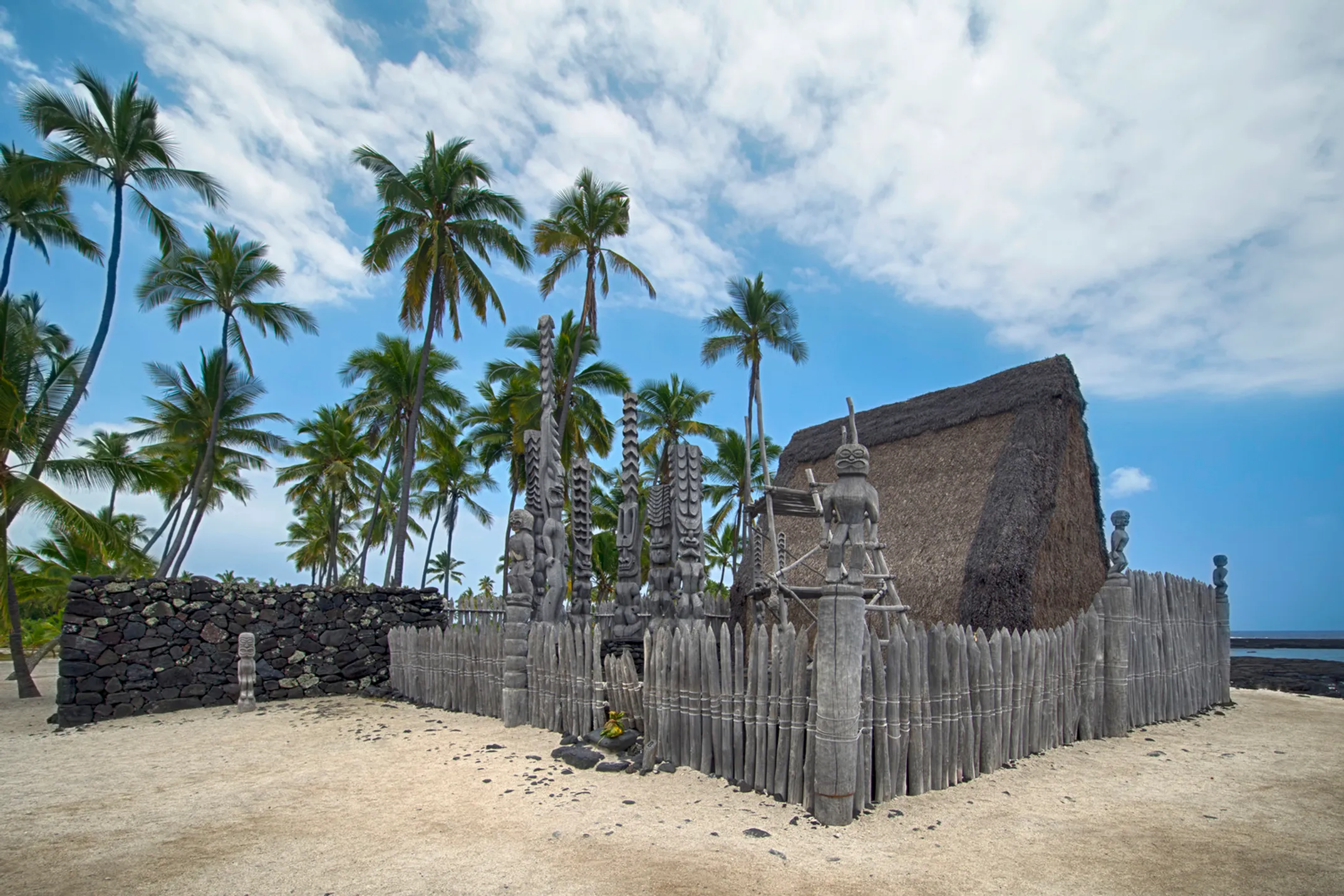
Your arms hurt. Your body screams for rest. But you push on. Your eyes stay fixed on the point of land ahead. You see them now. The fierce, carved faces of the kiʻi standing guard. You see the massive, dark line of the Great Wall. It's the finish line of your life's most important race.
With one final burst of strength, your feet touch something solid. Sand. You crawl from the surf, gasping, onto the shore of the Puʻuhonua. Behind you, the canoes stop. The men lower their spears. They can't come closer. Here, inside these sacred boundaries, no blood can be shed. You made it. You are safe.
Soon, a kahuna pule, a temple priest, will come. He will lead you through cleansing ceremonies. Prayers and rituals will satisfy the gods. They will wash away your crime. Your life, which was lost moments ago, will be given back. You will be free to return to your village. Your place in society will be restored. You have been reborn at Hōnaunau.
Ready to Walk Through History?
Continue your journey through the sacred grounds of Puʻuhonua o Hōnaunau with our detailed self-guided walking tour.
Start the Walking Tour🗺️ Complete Guide
Introduction & History
Self-Guided Walking Tour You are here
Explore the sacred grounds
A Perfect Day GuideCulture & snorkeling
ℹ️ Park Information
- Hours: 8:15 AM - Sunset
- Entry Fee: $20 per vehicle
- Location: South Kona
- Drive Time: 20 min from Kona
🎒 What to Bring
- Reef-safe sunscreen
- Water & snacks
- Comfortable walking shoes
- Snorkel gear (for Two Step)
- Camera
🙏 Cultural Respect
- Stay on marked paths
- Don't touch or climb structures
- Never move or take rocks
- Speak softly and respectfully
📧 Stay Updated
Get the latest Hawaii cultural site guides and travel tips.

